Private testing — a few seats at a time
Underwrite a storage deal in the time it takes to read the rent roll.
Drop in a rent roll and a T-12. Get a real monthly model — unit mix, loss-to-lease, absorption, financing and returns — and a straight answer on whether the deal actually works.
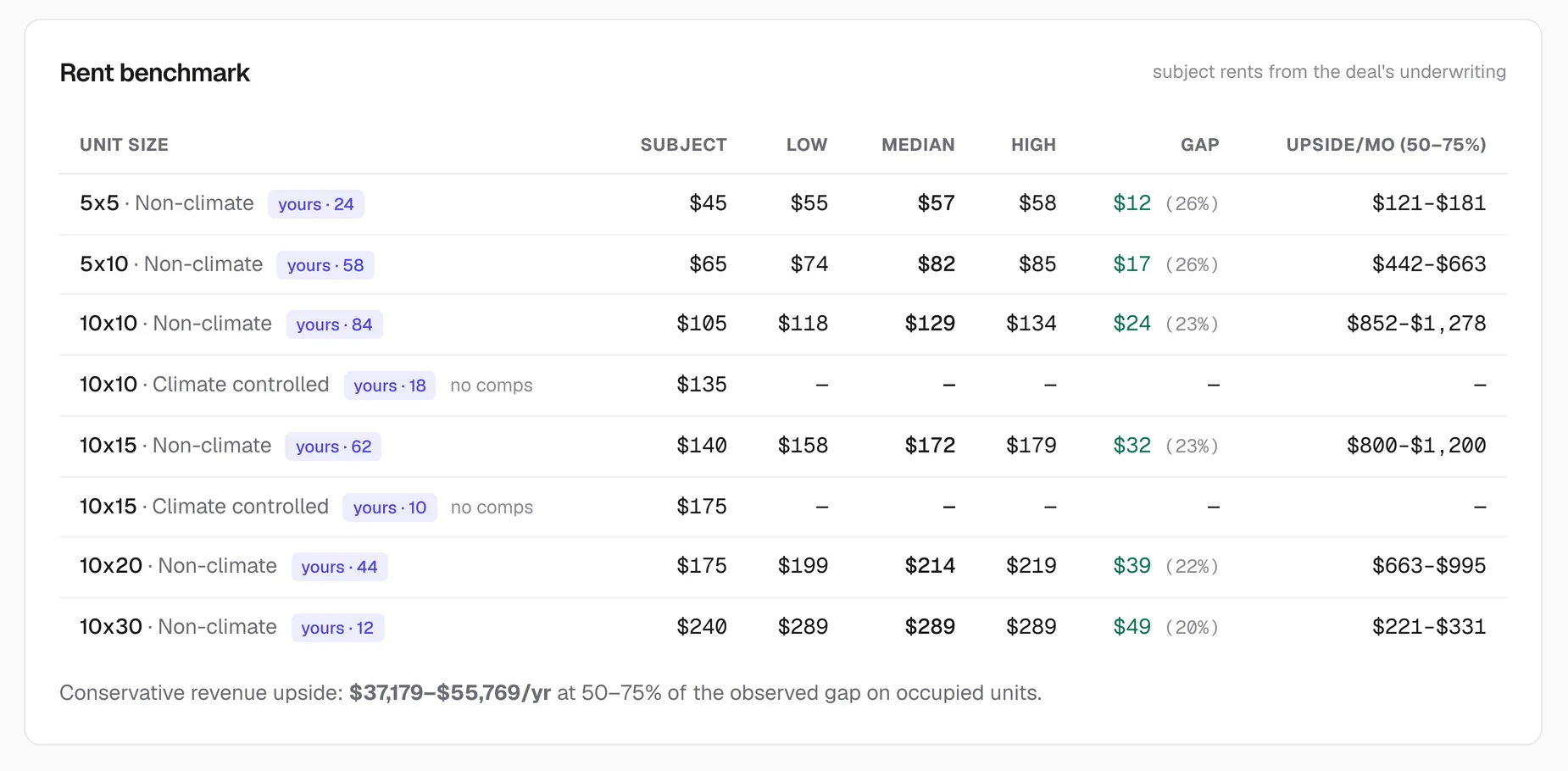
Every unit size against the competition — your rent, their median, the gap, and the upside at a conservative 50–75% of it.
Who this is for
You own a few facilities
And you rebuild the same Excel model every time a rent roll lands in your inbox.
You're actively acquiring
Deals in flight, and you need to compare structures before the LOI goes out.
You're hunting your first
And you want to know whether the numbers work before you commit to anything.
Not built for institutional portfolios, and it doesn't run your facility once you own it — that part comes later.
Intake
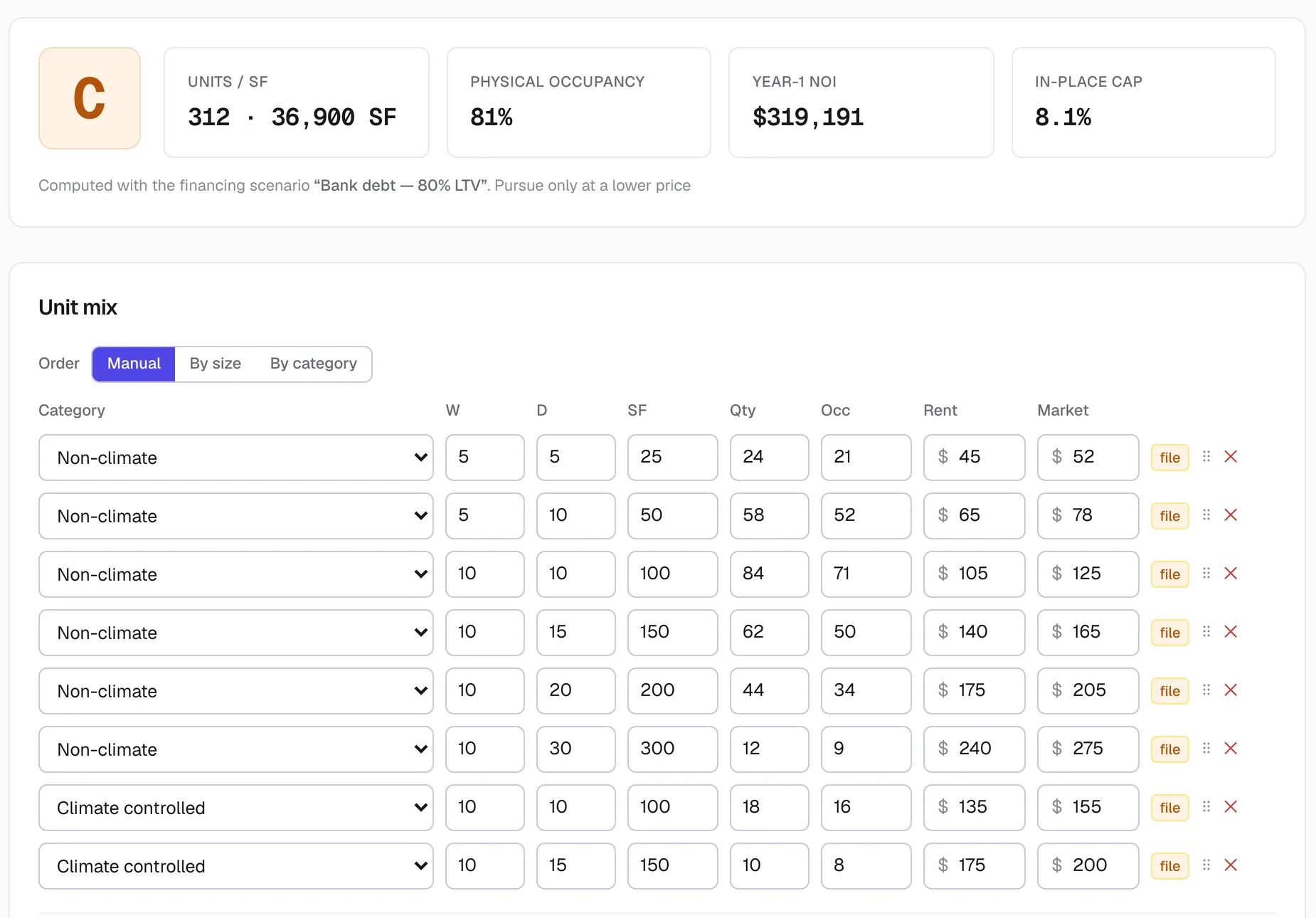
It reads the file. You check the rows.
Financing
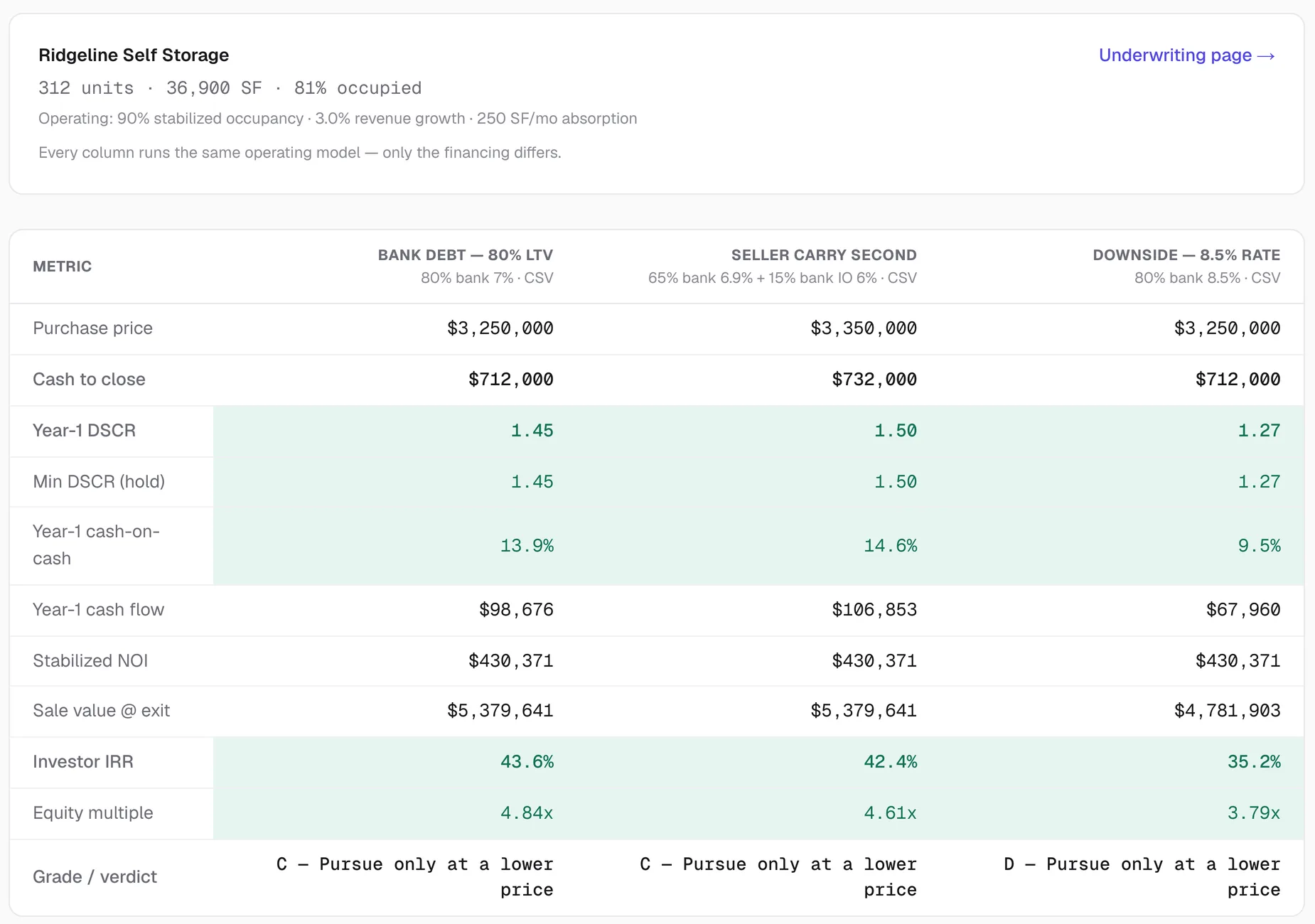
It compares structures, not just price.
Pipeline
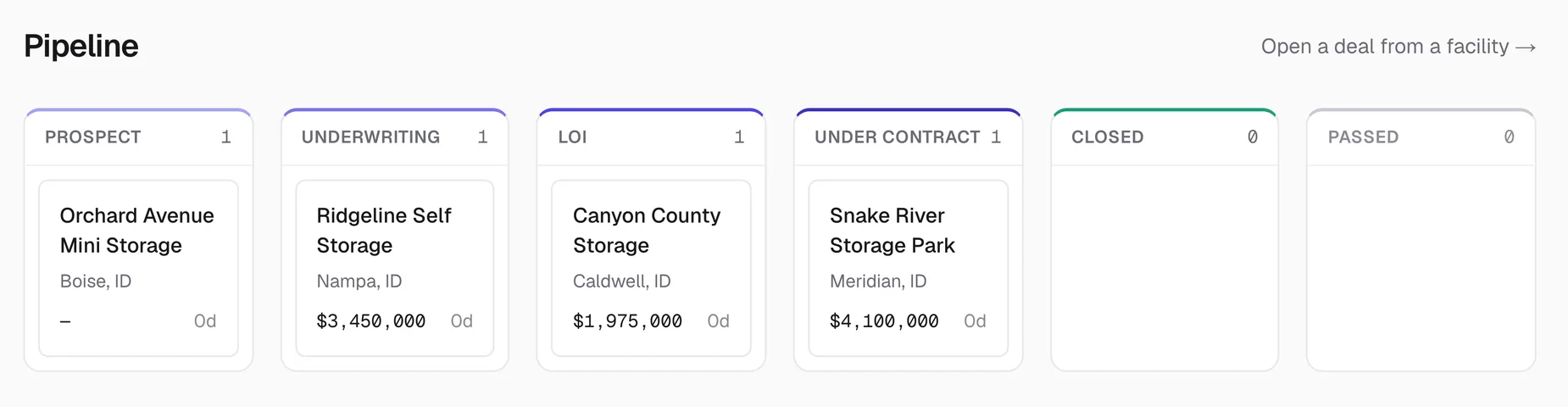
And it keeps the deal moving.
It will tell you a deal is bad
The defaults are conservative on purpose, and they don't bend to make a deal pencil. Every scenario gets a grade and a verdict, and “pursue only at a lower price” is one it hands out often — including on the example above. That's the job. The cheapest deal you'll ever do is the one you walk away from.
What being a tester means
It's free while we're testing
No card, no trial clock. Pricing comes later, and you'll hear about it well before it applies to you.
You'll hit rough edges
There's a feedback button on every page. I read all of it, and a fair amount of it gets fixed the same week.
A few people at a time
Not for scarcity's sake — I just can't act on the feedback if everyone arrives at once.
Your deals stay yours
Every account is its own silo. Your facilities, deals and uploaded documents are visible to you and nobody else.
Request early access
A few questions so I can tell who'd get the most out of it right now. The last one is the most useful thing you can tell me.